The Whipple procedure: why and how it is done
A calm, step-by-step explanation of one of the most complex abdominal operations: what is removed, the three new joins, and life afterwards.
- Length
- 02:22
- Specialty
- Hepatobiliary
- Style
- Anatomy only
- Includes
- Subtitles and transcript
Transcript · 347 words
What the film says
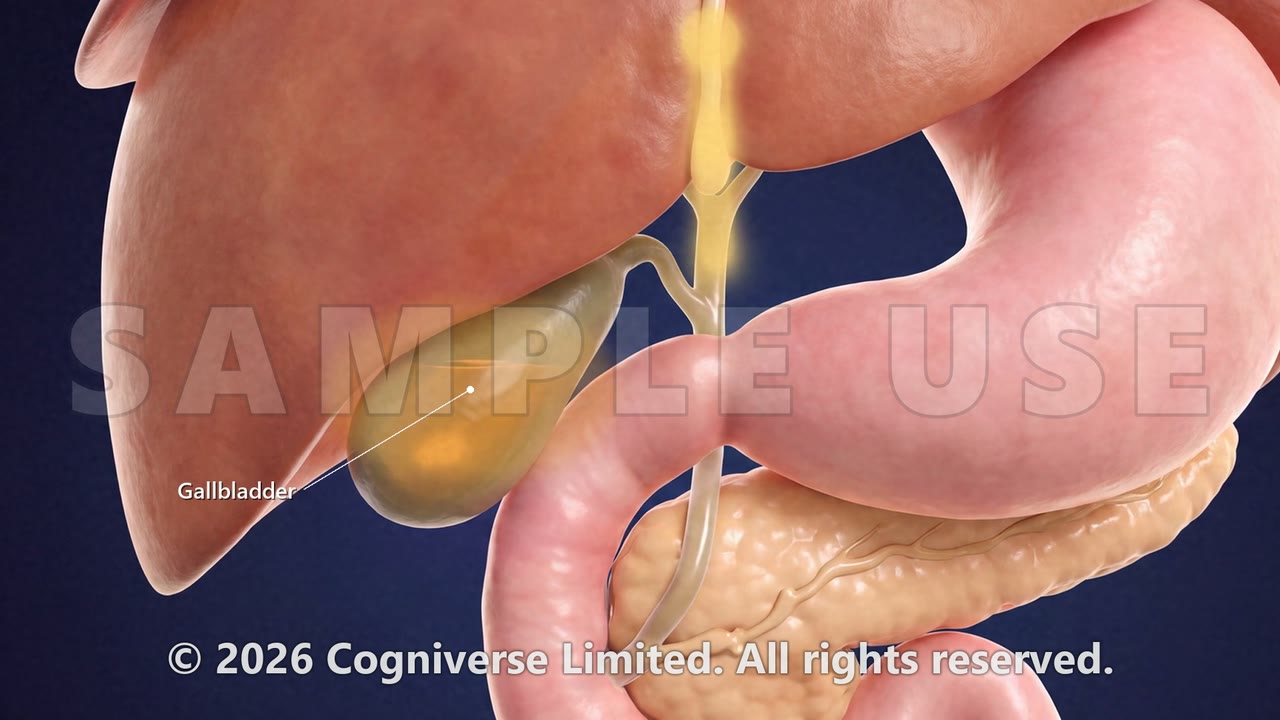
The Whipple procedure is a major operation, most often used to treat cancer in the head of the pancreas. The pancreas lies deep in your upper tummy, behind the stomach and in front of the spine. It has a head, a body and a tail.
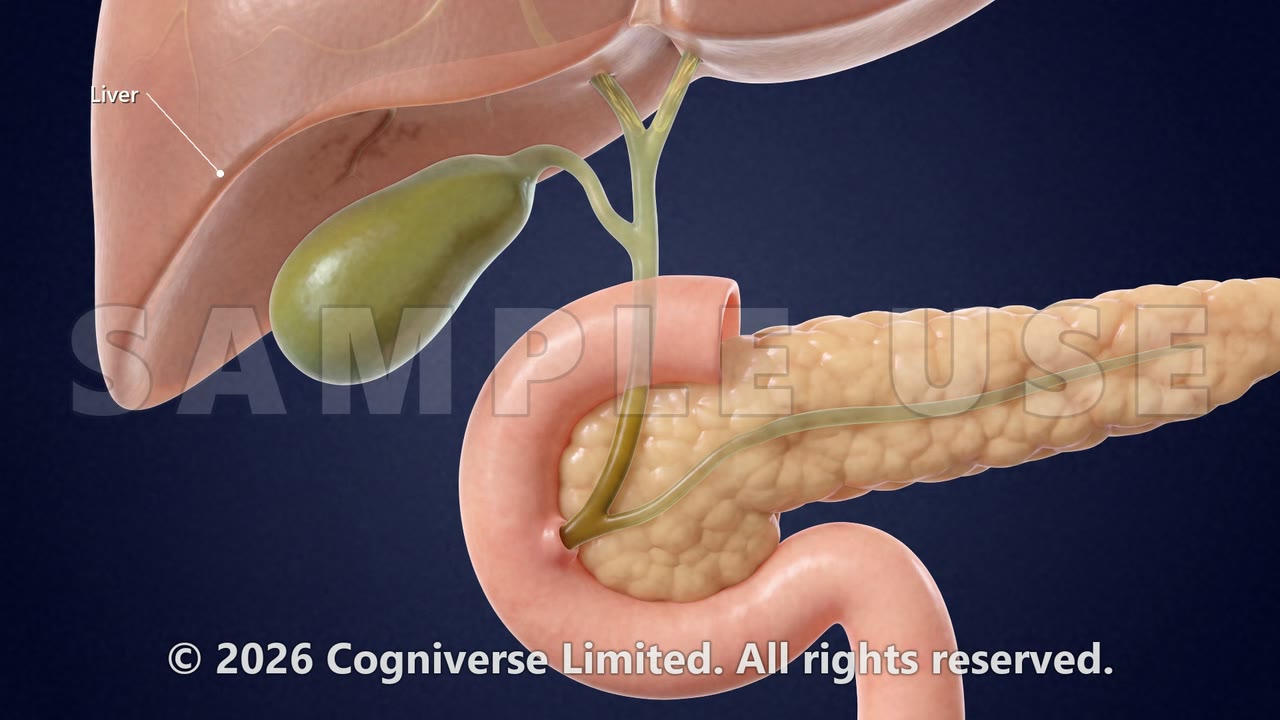
The head sits in the curve of the duodenum, the first part of the small intestine. The pancreas makes digestive juices, which drain into the duodenum, and hormones such as insulin, which control your blood sugar. Bile from the liver and gallbladder also flows down the bile duct, which passes through the head of the pancreas.
A tumour in the head of the pancreas can press on the bile duct and block it. Bile builds up, which can cause jaundice. Surgery may be offered when scans show the cancer has not spread, and can be removed safely.
The surgeon also checks nearby blood vessels. If the tumour is close to a major vein, part of it can sometimes be removed and repaired. The operation is done under general anaesthetic.
It is usually open surgery, through one cut in the tummy. In some specialist centres, it can be done as keyhole or robotic surgery, through several small cuts. The surgeon removes the head of the pancreas, the duodenum, the gallbladder, the lower part of the bile duct, and nearby lymph nodes.
Sometimes part of the stomach is removed as well. Then the digestive system is rejoined, using a loop of small intestine. First, the remaining pancreas is joined to the intestine, so its digestive juices can drain.
Next, the bile duct is joined, so bile can flow into the intestine again. Finally, the stomach is joined, so food can pass through. The operation usually takes several hours, and most people stay in hospital for one to two weeks.
Afterwards, many people take enzyme capsules with meals to help digest food, and some develop diabetes. Chemotherapy is often recommended before or after surgery. Your specialist team will talk you through each step.
Ask your specialist team if the Whipple procedure is right for you.
This film is general patient education. It is not medical advice and does not replace a consultation with your own doctor. In an emergency call 999. People shown in the film are AI-generated.