Liver cyst deroofing: keyhole surgery for a simple liver cyst
What a simple liver cyst is, when it needs treatment, and how keyhole deroofing drains the cyst and removes its roof so it cannot refill.
- Length
- 02:56
- Specialty
- Hepatobiliary
- Style
- People and anatomy
- Includes
- Subtitles and transcript
Transcript · 500 words
What the film says
Many people find out they have a cyst on the liver by chance, on a scan for something else. Most of the time, it's harmless, and it never needs treatment. But a large cyst can cause problems.
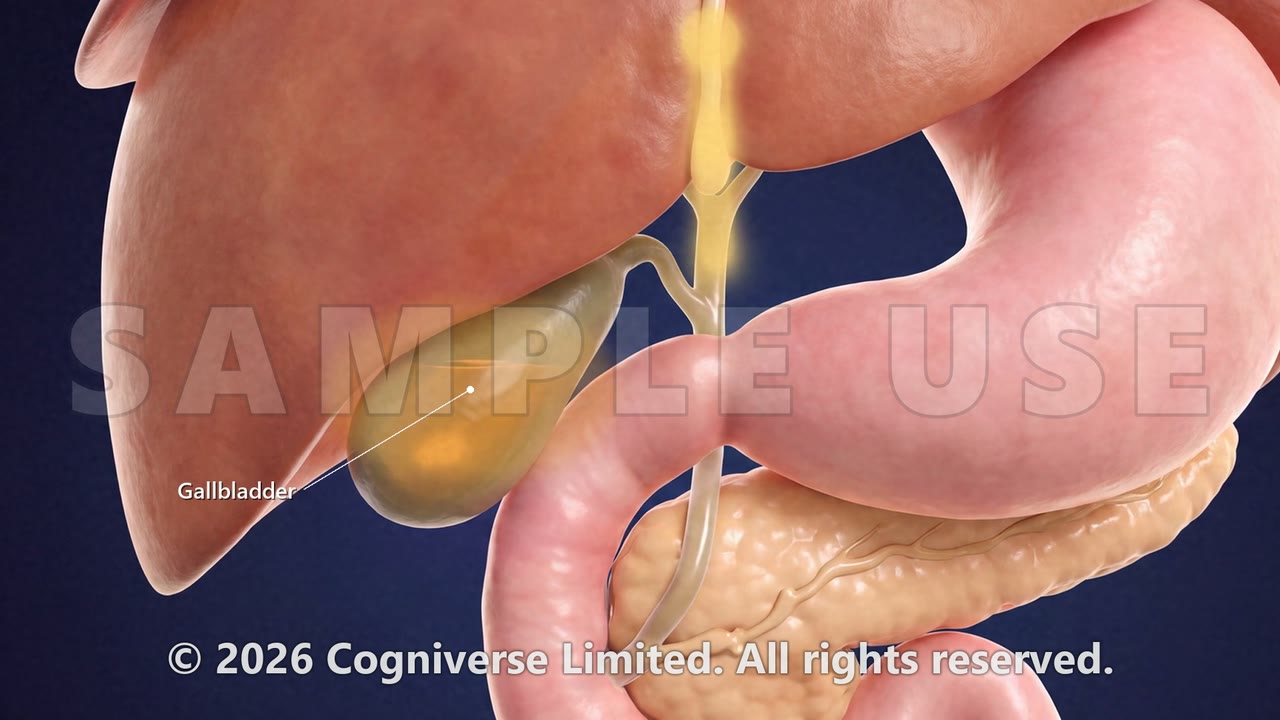
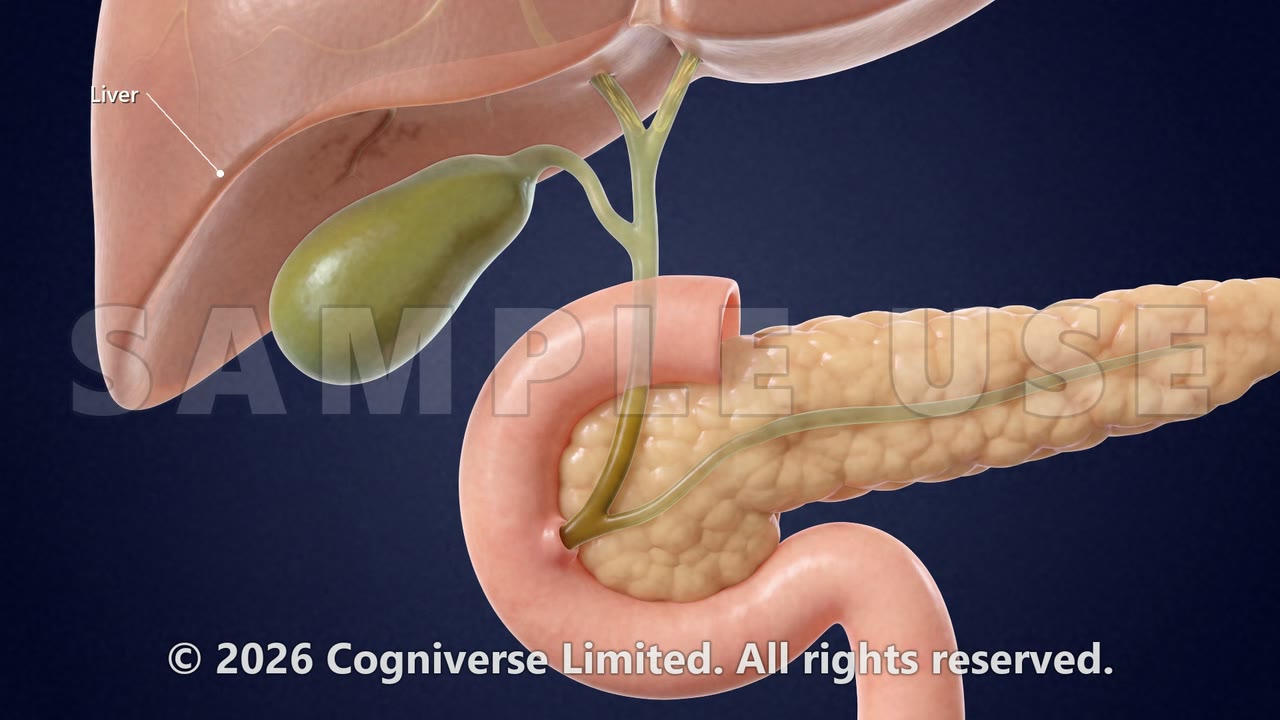
This film explains when it does, and how keyhole surgery can help. Your liver sits in the upper right of your tummy, tucked under your lower ribs. It's your largest internal organ, filtering your blood and helping you digest food.
A simple liver cyst is a thin-walled sac of clear, watery fluid, inside or on the surface of the liver. It's lined by a thin layer of cells that keep making that fluid. It isn't cancer, and it doesn't turn into cancer.
Most stay small and cause no trouble. But some slowly fill and grow, and a large cyst can press on the organs around it. You might feel an ache or pain in the upper right of your tummy.
Or bloating, a feeling of fullness, or getting full quickly when you eat, because the cyst presses on your stomach. These symptoms have many causes, so if they're new or they persist, see your GP. And if you have a fever, severe pain, or your skin or the whites of your eyes turn yellow, get medical help urgently.
An ultrasound scan is usually the first test. It shows the cyst as a smooth, dark, fluid-filled space. A CT or MRI scan may follow, to confirm it's a simple cyst and plan any treatment.
There's no size at which a cyst must be treated. Treatment is for a cyst that's causing symptoms. Draining it with a needle alone gives only short relief, because the lining keeps making fluid and the cyst refills.
Instead, your specialist may offer a needle drainage with a medicine that seals the lining, or keyhole surgery called deroofing. Deroofing is done under general anaesthetic, so you're asleep throughout, through a few small cuts in your tummy. Your tummy is gently filled with gas to make space, and a thin camera shows the liver on a screen.
The surgeon drains the fluid, then cuts away the cyst's roof: the part of its wall that bulges from the surface of the liver. The cut edge is sealed to stop any bleeding, and the removed wall is sent to the laboratory to confirm the cyst was simple. What's left is a shallow, open hollow in the liver.
Any fluid the lining still makes now drains freely into the tummy, where the body absorbs it. Most people stay in hospital for a night or two, and are up and walking soon after the operation. Bloating, some tummy pain, and pain at the tip of the shoulder from the gas are common at first, and settle over a few days.
Most people get lasting relief. Sometimes a cyst fills again, and your team will talk you through what happens next. If a liver cyst is causing you symptoms, ask your GP about seeing a specialist.
This film is general patient education. It is not medical advice and does not replace a consultation with your own doctor. In an emergency call 999. People shown in the film are AI-generated.