Pancreatitis: know the signs
What the pancreas does, how gallstones and alcohol can inflame it, and the sudden tummy pain that needs urgent help.
- Length
- 02:50
- Specialty
- Hepatobiliary
- Style
- Anatomy only
- Includes
- Subtitles and transcript
Transcript · 431 words
What the film says
Pancreatitis means the pancreas has become inflamed. Sudden, severe tummy pain that won't go away should never be ignored. The pancreas is a gland about the size of your hand.
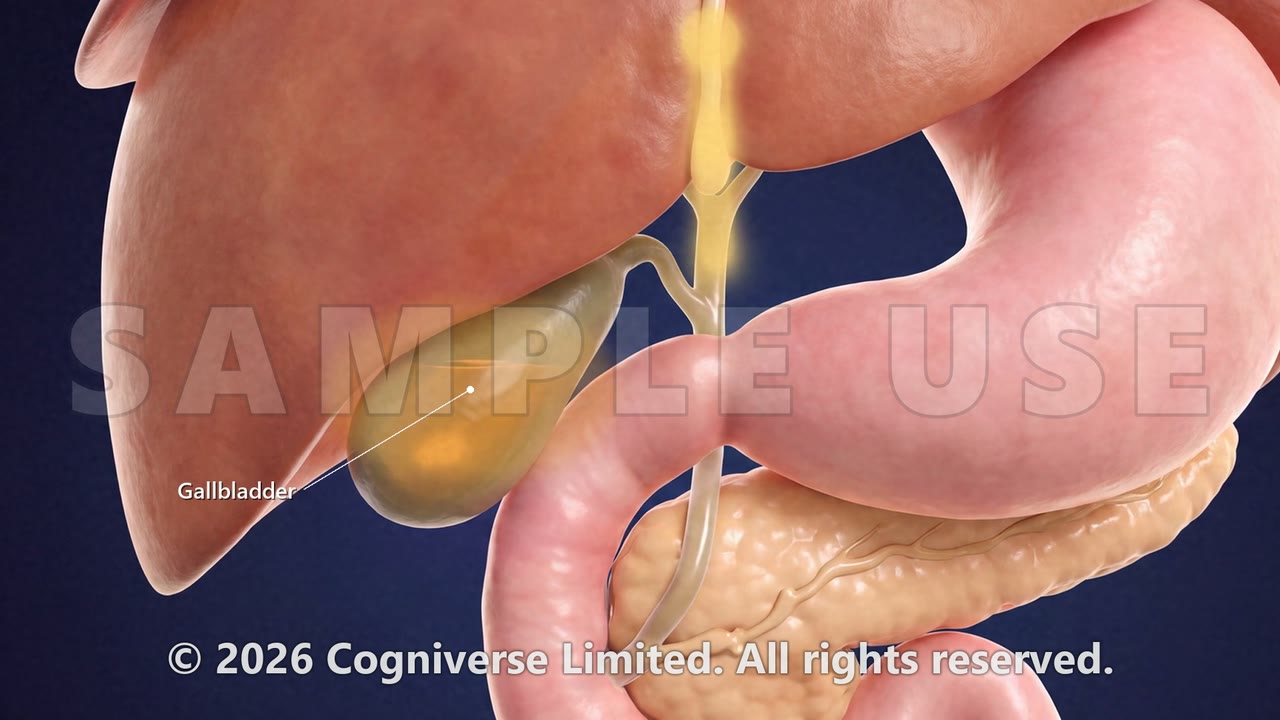
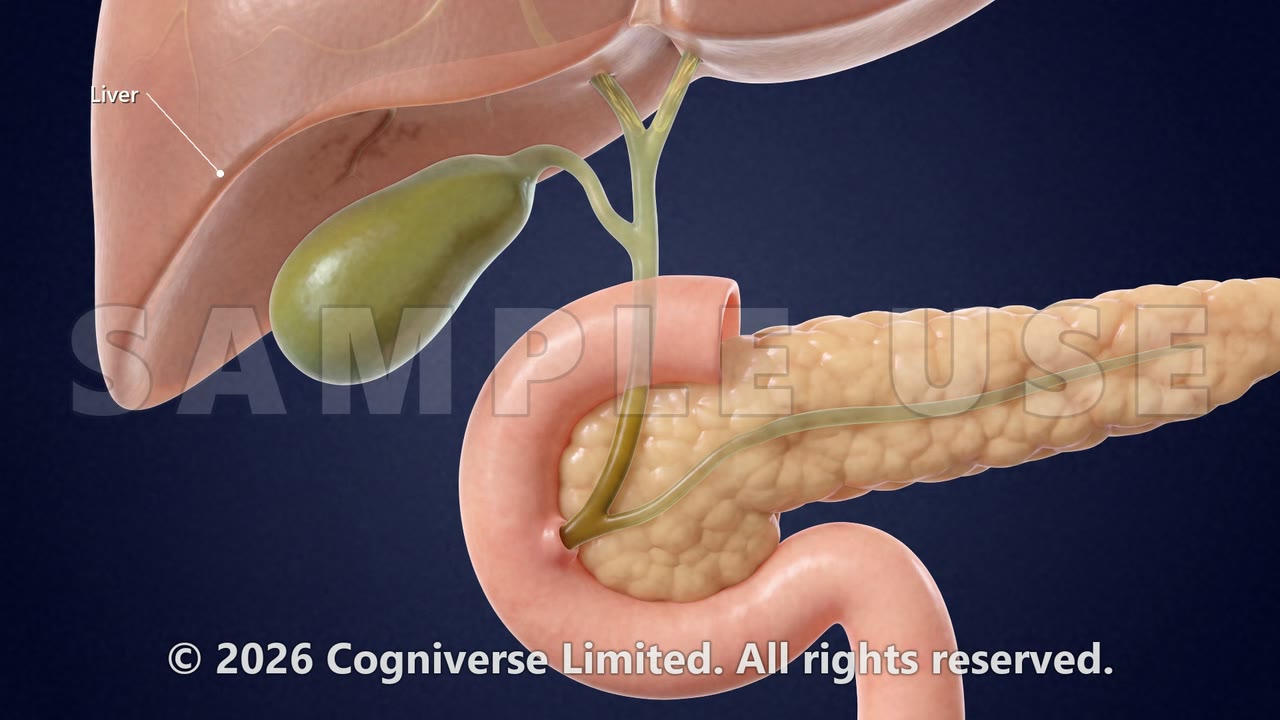
It lies deep in the upper tummy, behind the stomach. It makes hormones, such as insulin, that control your blood sugar, and a digestive juice that helps break down food. The juice flows along a duct into the small bowel.
The bile duct, from the liver and gallbladder, joins it at a small shared opening. In acute pancreatitis, the digestive juice starts working too early, inside the pancreas itself. The gland becomes swollen and inflamed.
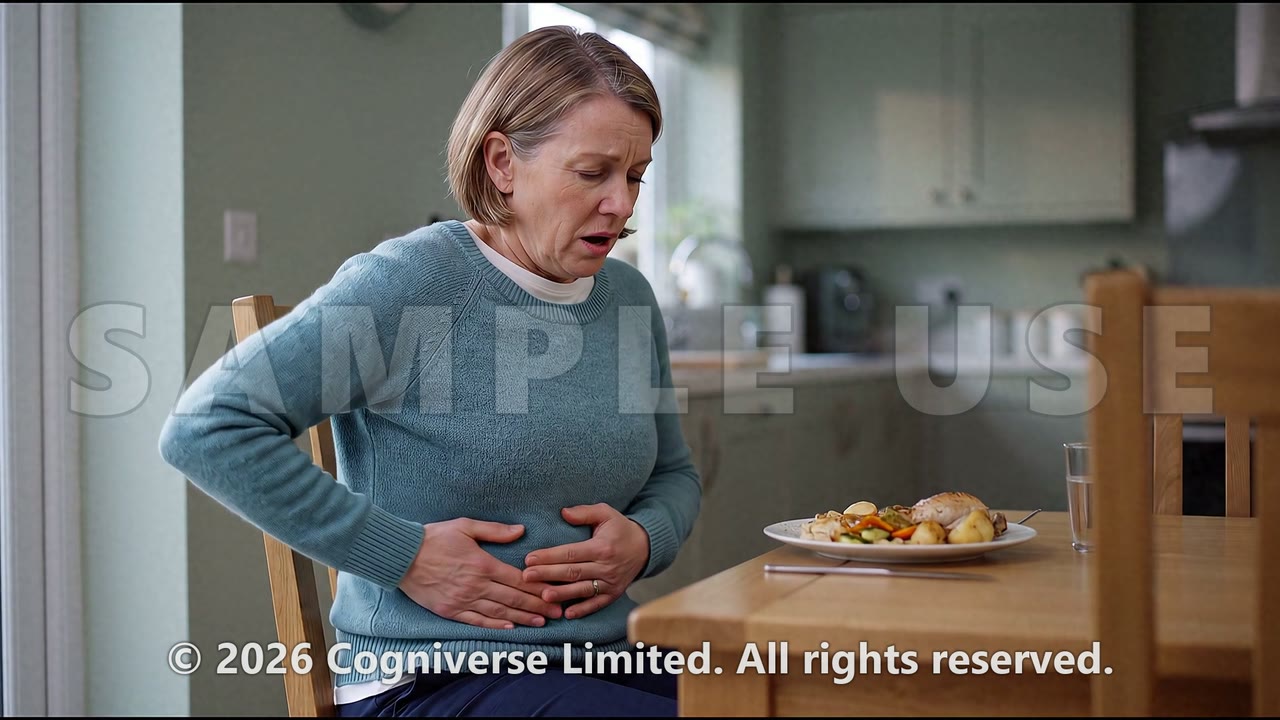
The two most common causes are gallstones, which can block that shared opening, and drinking a lot of alcohol. The main symptom is tummy pain that starts suddenly, is severe, and doesn't go away. It's often high in the tummy, and can spread to the back.
You may feel or be sick, or have a high temperature. The pain can be worse after eating or lying down, and easier when you lean forward. Symptoms vary.
For some people, the pain is on one side, or across the whole tummy. If you have sudden, severe tummy pain that won't go away, get help straight away. Call 111, or ask for an urgent GP appointment.
Call 999 or go to A&E if the pain spreads to your back, your heart is racing, you're struggling to breathe, or the skin around your tummy looks bruised. In hospital, blood tests help confirm pancreatitis. An ultrasound scan looks for gallstones, and sometimes a CT scan is needed.
Treatment supports your body while the pancreas settles: fluids through a drip, pain relief, and oxygen if needed. Most people start eating again as soon as they feel able. If not, nutrition can be given through a feeding tube.
If gallstones caused the attack, the gallbladder is usually removed by keyhole surgery, often during the same hospital stay. A stone stuck in the bile duct can be removed with a thin, flexible camera passed through the mouth. This is called ERCP.
If alcohol was the cause, stopping drinking completely is the most important step, and support is available. Most people get better within a week. Some attacks are severe, and need a longer stay and more intensive care.
Repeated attacks can lead to chronic pancreatitis, a long-term condition where the pancreas stays inflamed and becomes scarred. Not drinking alcohol, not smoking, and eating a healthy, low-fat diet all help protect your pancreas. Sudden, severe tummy pain that won't go away?
Get urgent medical help.
This film is general patient education. It is not medical advice and does not replace a consultation with your own doctor. In an emergency call 999. People shown in the film are AI-generated.