Robotic bile duct exploration: what to expect
How a gallstone can block the bile duct, the signs of a blocked duct, and how the duct is cleared in the same operation that removes the gallbladder.
- Length
- 03:00
- Specialty
- Hepatobiliary
- Style
- People and anatomy
- Includes
- Subtitles and transcript
Transcript · 459 words
What the film says
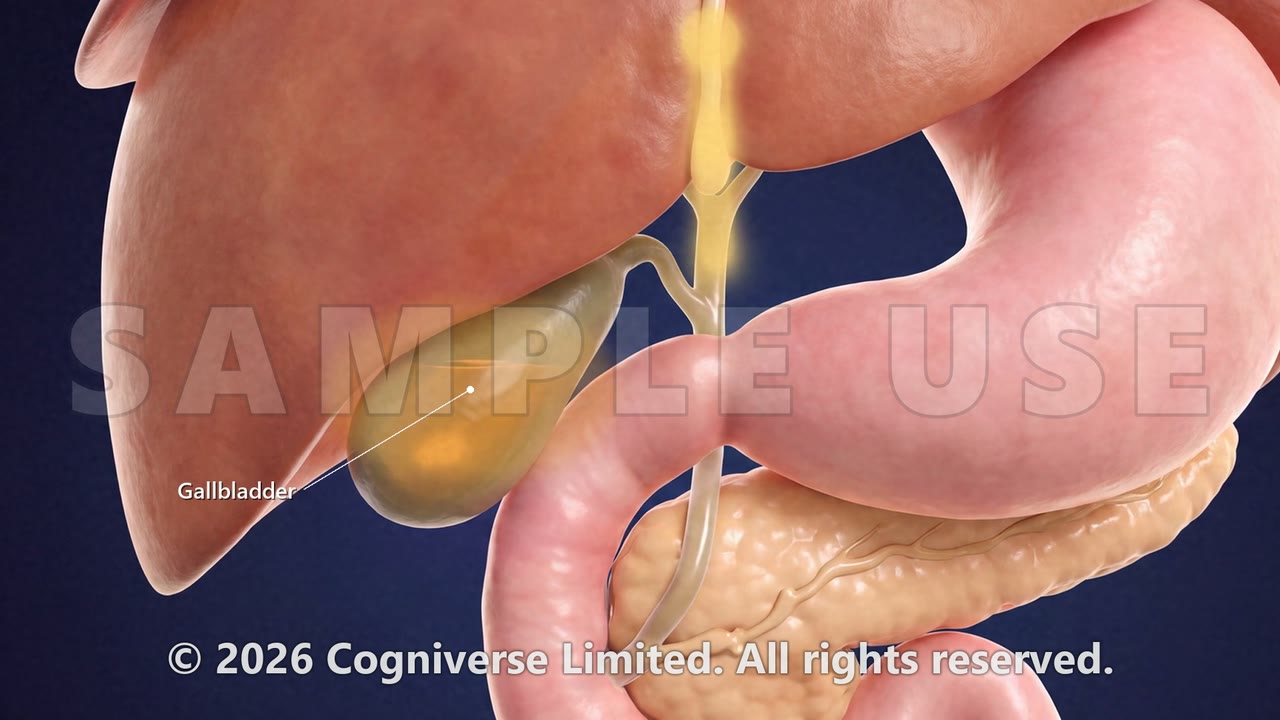
Gallstones are common, and many cause no trouble at all. But sometimes a stone slips out of the gallbladder and gets stuck in the bile duct. Your liver makes bile, a fluid that helps you digest fat.
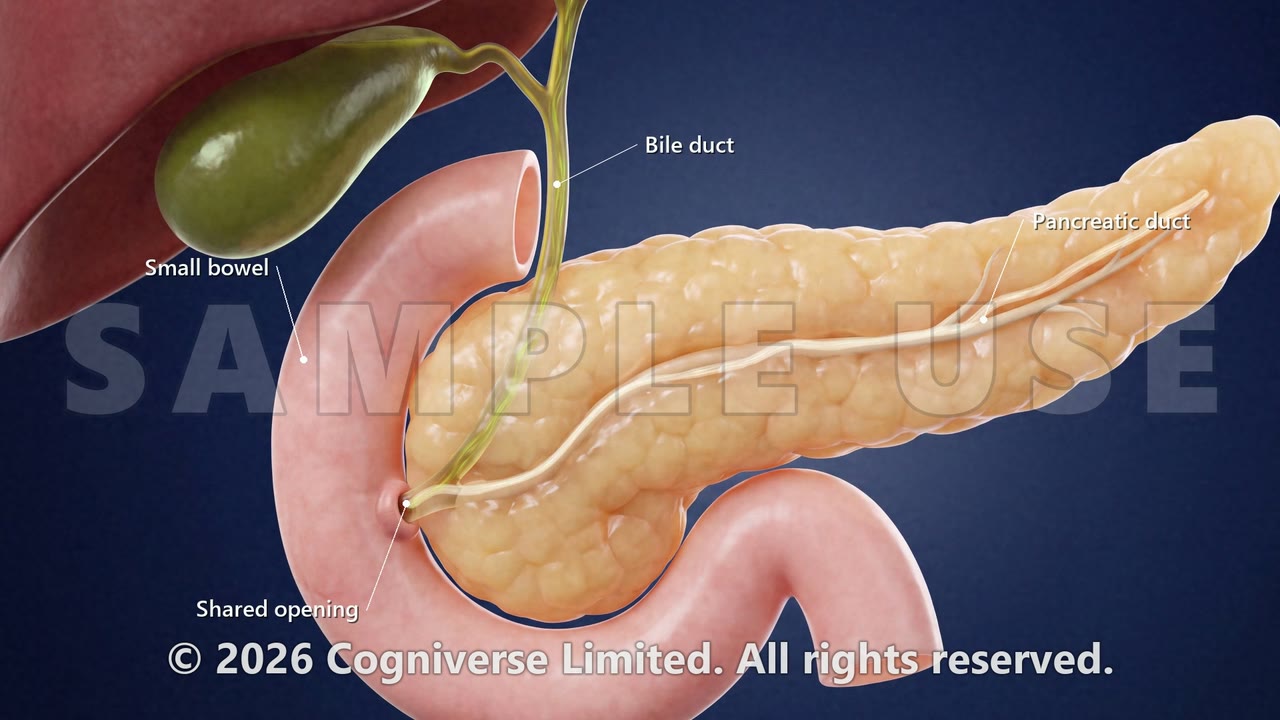
Bile is stored in the gallbladder, then flows down the bile duct into your small intestine. A stone can pass from the gallbladder into this duct and block the flow. Bile then backs up into your blood.
The trapped bile can become infected, and a stone near the pancreas can inflame it too. Signs of a blocked duct include yellow skin or yellow whites of the eyes, itchy skin, dark pee and pale poo. There may be pain under the ribs on the right, or in the middle of your tummy.
Some people have little pain at all. If your skin or eyes turn yellow, or you have a very high temperature or feel shivery, call 999 or go to A&E. Blood tests and an ultrasound scan are usually the first step.
An MRI scan can show stones in the duct itself. The usual plan is to clear the bile duct and remove the gallbladder, so new stones can't follow. The duct can be cleared with a camera passed through the mouth, called an ERCP.
Or it can be cleared during the same operation that removes the gallbladder. That operation is a bile duct exploration. It's done under general anaesthetic, through a few small cuts.
In robotic surgery, the instruments are held by robotic arms. Your surgeon controls every movement from a console beside you. First, an X-ray dye test or an ultrasound shows exactly where the stones are.
Sometimes the stones can be reached through the small duct that drains the gallbladder. If not, the surgeon makes a small opening in the bile duct itself. A very thin camera is passed into the duct.
Stones are caught in a tiny wire basket, or flushed through. The surgeon checks the duct is clear all the way down to the intestine. The opening is closed with fine stitches.
Sometimes a small tube is left inside the duct to help it heal, and removed later. Finally, the gallbladder is removed, and a thin drain may be left for a day or two. Most people stay in hospital for one or two nights.
Your tummy and shoulders may ache for a few days. Walking early helps you recover. A small bile leak can happen and usually settles.
Occasionally a stone is left behind, and can be removed later. After you go home, contact the hospital if you have a high temperature, yellow skin, dark pee, or pain that painkillers don't help. Yellow skin or eyes, a high temperature or severe pain?
Get help straight away.
This film is general patient education. It is not medical advice and does not replace a consultation with your own doctor. In an emergency call 999. People shown in the film are AI-generated.