Coronary angiogram: what to expect
Why an angiogram is done, how dye and X-rays show the arteries of the heart, and what happens on the day.
- Length
- 02:51
- Specialty
- Cardiology
- Style
- People and anatomy
- Includes
- Subtitles and transcript
Transcript · 490 words
What the film says
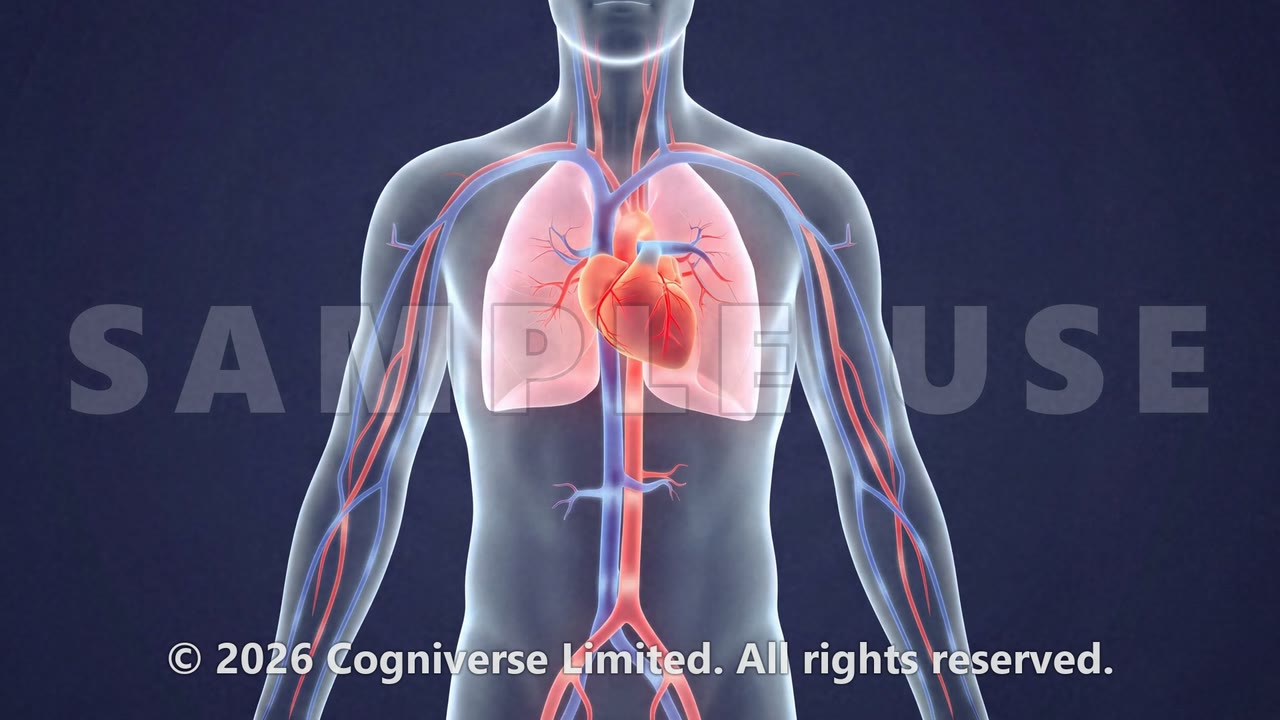
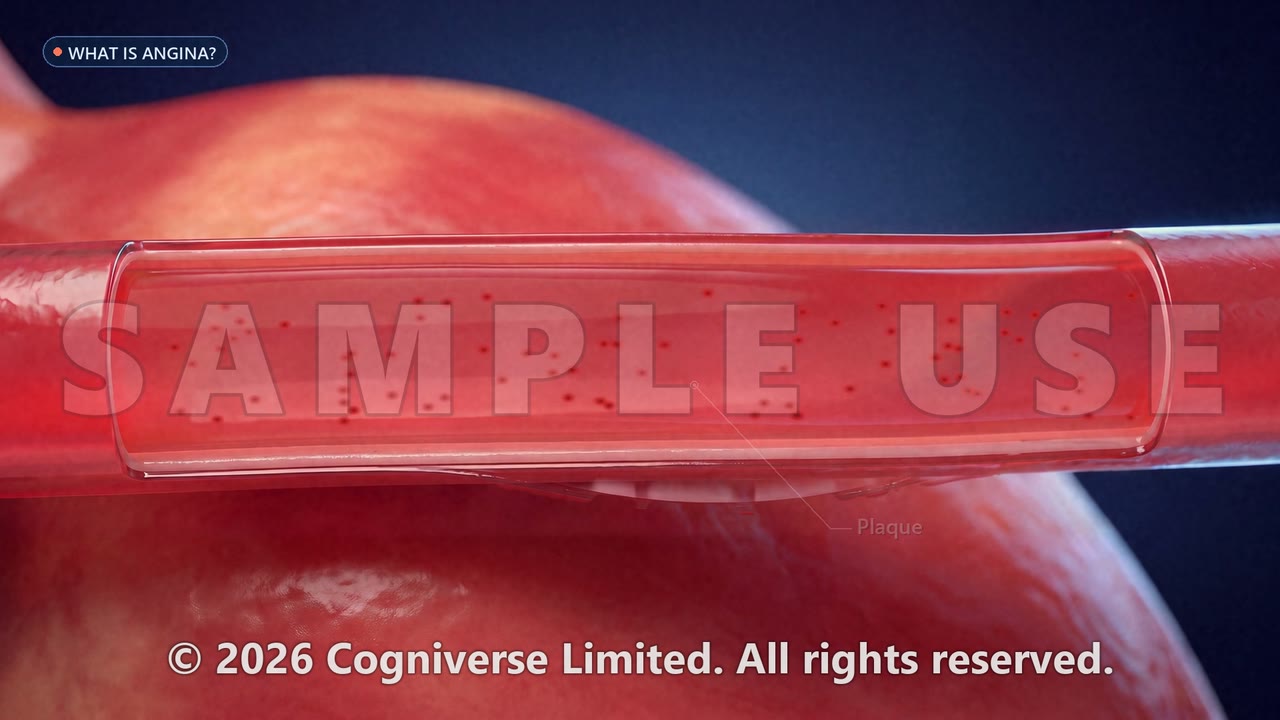
A coronary angiogram is a test that shows the blood supply to your heart. It helps your doctor see whether the arteries that feed the heart muscle are narrowed or blocked. These are the coronary arteries.
They run over the surface of the heart, and they don't show up on an ordinary X-ray. So a special dye is injected into them through a thin, flexible tube called a catheter, while X-ray pictures are taken. Before the test you'll have blood tests, and you'll be told whether to stop any of your medicines.
You may be asked not to eat or drink for a few hours beforehand. The test is done in a cardiac catheter laboratory. You lie flat on an X-ray table, and you're awake throughout.
You may be offered a sedative to help you relax. The team monitors your heart rate, rhythm and oxygen level the whole time. The catheter goes in through an artery in your wrist, or sometimes at the top of your leg.
The skin is numbed first with a local anaesthetic. Guided by X-ray, the catheter is passed along the artery to your heart. You may feel some pushing, but it shouldn't be painful.
Its tip is placed at the opening of each coronary artery in turn, and the dye is injected. For a few seconds you may feel warm and flushed, and as though you need to pee. That's normal, and it passes quickly.
On the X-ray screen, the dye outlines each artery. A narrowing shows up where the column of dye becomes thin. Sometimes a narrowing can be treated straight away, by stretching it with a small balloon and fitting a stent.
Your doctor will discuss this with you beforehand. The test usually takes about half an hour, though it can take longer. Afterwards the catheter is removed.
If your wrist was used, a tight band is put on to stop any bleeding. If the top of your leg was used, firm pressure is applied, and you'll need to lie flat for a while. You'll rest for a few hours while the team checks on you.
Most people go home the same day. You won't be able to drive yourself, so arrange for someone to take you home, and to stay with you for the first 24 hours. Rest for the remainder of the day, and drink plenty of water to help flush out the dye.
Avoid heavy lifting and strenuous exercise for a few days. Some bruising and soreness where the catheter went in is common. Serious complications are rare.
They include a heart attack, a stroke, or a severe allergic reaction to the dye. Get medical help if the wound bleeds and doesn't stop when you press on it, becomes hot, red and swollen, or very painful, or if your hand or leg turns pale or cold. Your doctor will explain what the pictures show, and whether they recommend any treatment.
This film is general patient education. It is not medical advice and does not replace a consultation with your own doctor. In an emergency call 999. People shown in the film are AI-generated.