Chest pain: causes and when to act
Heart, lung, stomach and muscle causes of chest pain, and a clear rule for when to call 999, NHS 111 or a GP.
- Length
- 03:02
- Specialty
- Cardiology
- Style
- People and anatomy
- Includes
- Subtitles and transcript
Transcript · 416 words
What the film says
Chest pain has many causes. Most aren't serious, but sometimes it's a medical emergency. Knowing the warning signs, and what to do, could save a life.
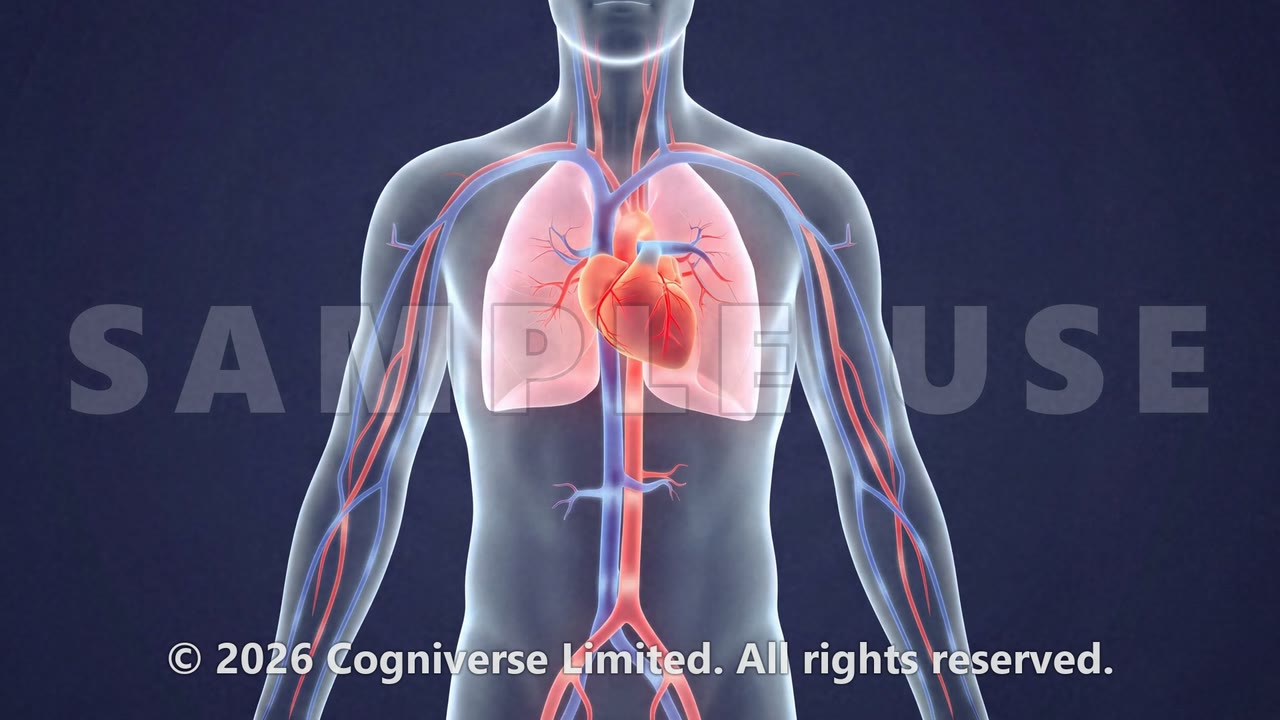
Your chest holds your heart and lungs, your food pipe, and the muscles and ribs around them. Pain can come from any of them. Your heart muscle is fed by the coronary arteries.
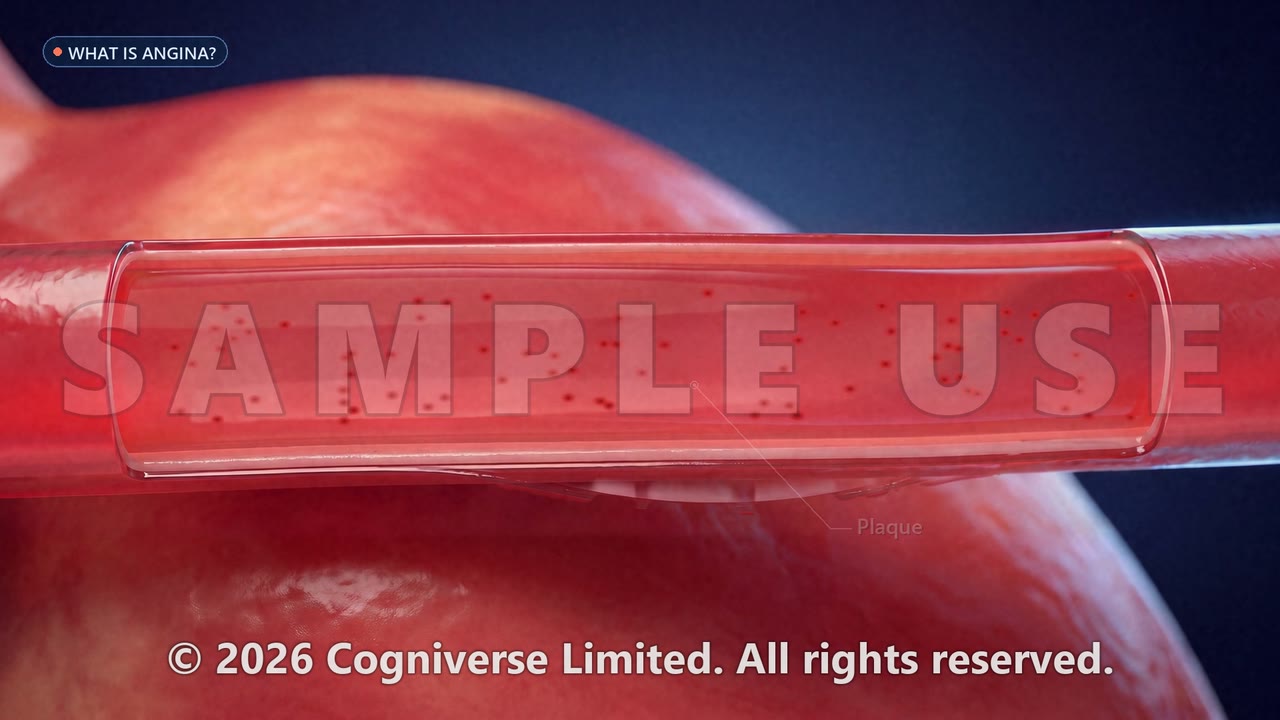
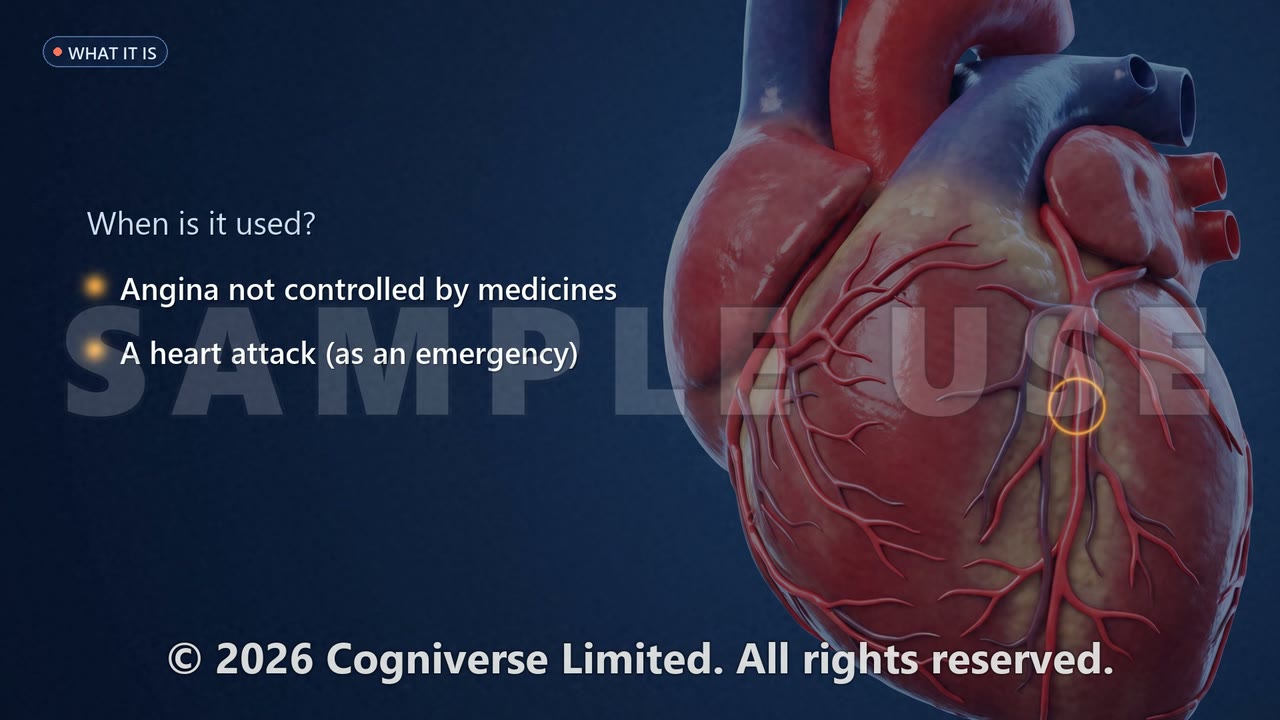
If they're narrowed, it can run short of oxygen when it works harder. This can cause angina: a tight, squeezing pressure, often brought on by exercise or stress, that usually eases with a few minutes' rest. If a blood clot blocks one of these arteries, it's a heart attack and an emergency.
The heart muscle beyond the blockage is then starved of oxygen. Lung problems can cause pain that's worse when you breathe in. A chest infection may also bring a cough and a high temperature.
A blood clot in the lungs, a pulmonary embolism, can cause sudden breathlessness and chest pain. It's also an emergency. Heartburn is a burning feeling in the middle of the chest, often after eating or when lying down.
A strained muscle, or inflamed cartilage beside the breastbone, often hurts more when you move, breathe deeply or press on it. Anxiety and panic attacks can cause chest pain too, with a racing heartbeat, sweating and dizziness. But these causes can be hard to tell apart, and a heart attack can even feel like indigestion.
Call 999 straight away if you have sudden chest pain that doesn't go away. It may feel like squeezing, pressure or burning. Call 999 if the pain spreads to your arms, neck, jaw, stomach or back.
Or if you have chest pain and feel sweaty, sick, light-headed or short of breath. Symptoms differ: some people, especially women, may feel suddenly anxious, or have tummy pain, instead of chest pain. Don't drive yourself to hospital.
Sit down, rest, and follow the advice of the 999 call handler. If chest pain comes and goes, or passes quickly but you're still worried, speak to a GP or call NHS 111. Paramedics or doctors will usually record an ECG, a tracing of your heart's electrical activity.
Blood tests can show if the heart muscle is damaged, and some people need a chest X-ray or scan. The results help doctors find the cause and the right treatment. If you're ever unsure about chest pain, get medical advice, just in case.
If you have sudden chest pain that doesn't go away, call 999 immediately.
This film is general patient education. It is not medical advice and does not replace a consultation with your own doctor. In an emergency call 999. People shown in the film are AI-generated.